“I remember I was sitting alone in the night of the garage where I worked and lived, when an obscure sadness swept over me. I shall refer to this fit of sorrow by the name of the city, and give that sadness that has dogged me all my life its own special name- “the sadness of Haifa”.
The sadness of Haifa has no cause. It doesn’t come from anger at anything or because of the loss of something and it in no way resembles depression. It’s a state that afflicts the soul, palpating its darkened chambers and settling there…” [1]
In these very accurate words, Adam Dannoun, the protagonist of My Name is Adam: Children of the Ghetto by Elias Khoury, described that unique melancholy that Haifa tends to inflict upon its inhabitants.
Adam, who grew up in the ghetto where the Palestinian residents of Lydda (Lod) where confined to after the 1948 war, has not seen the sea until he moved to Haifa. Hence, he linked Haifa’s sad genius loci with his experience of seeing the sea for the first time:
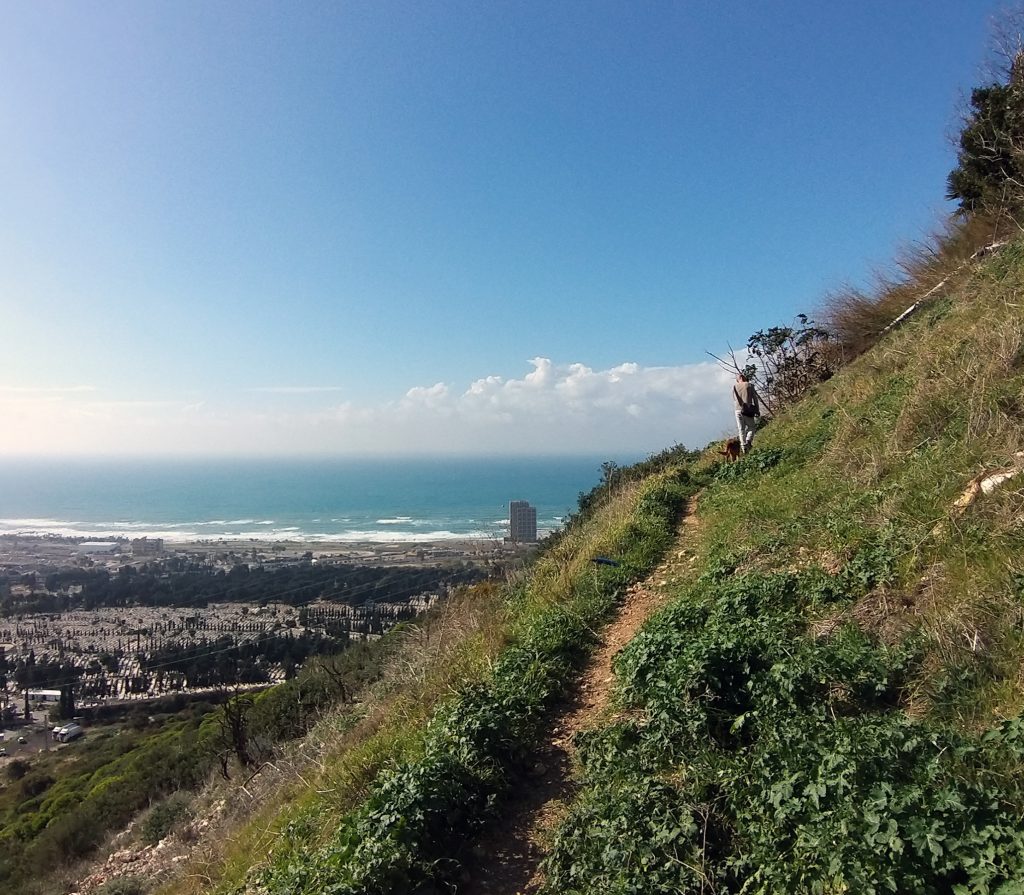
“A sadness unlike sadness: the Haifa sea mirrors the sadness of this city that sweeps down from the top of Mount Carmel and then stretches out its wings like a dove swooping over the vastness of the water.”
For me, the sadness of Haifa is explained differently. The sea and the mountain are a great source of happiness. However, the city itself is a source of frustration.
Many people who carry the title “originally from Haifa”, and I among them, have mixed feelings about their childhood hometown. On the one hand, it is a place of undoubtable natural beauty. On the other hand, the heart breaks at the sight of the remains of the city’s long-gone glory days.
One of the sites that most clearly evokes this bittersweet emotion is the beautiful Bustan Khayat, at the lower part of Wadi Siah, between the neighborhoods of Carmelia, Kababir and Kfar Samir (where the city’s cemeteries are located).
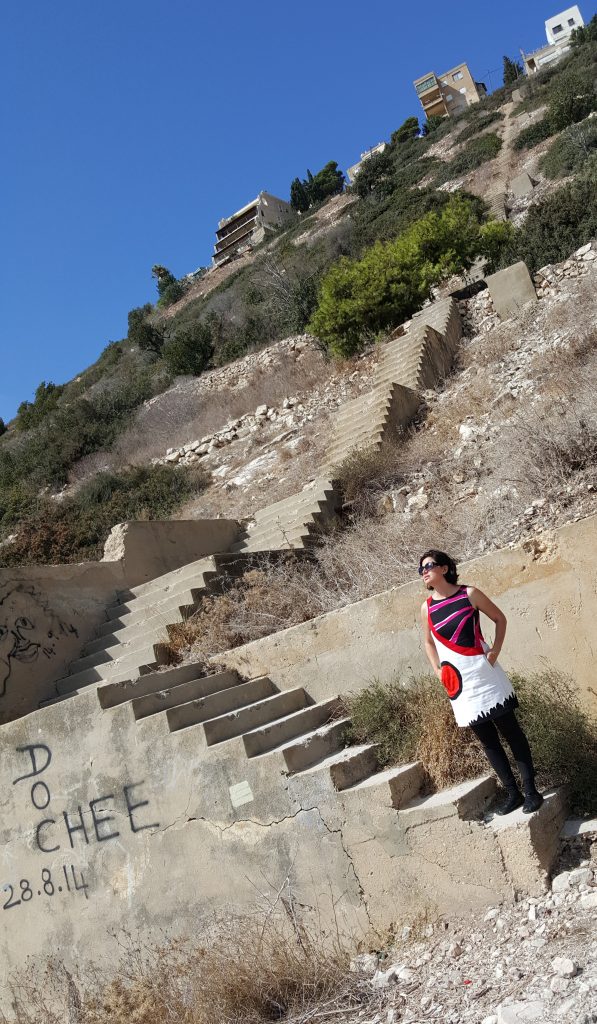
The bustan[2] was built in the early 1930s by Azeez Khayat, a member of the well-known Christian Arab Khayat family. The Bustan inspiringly fits the man-made elements, such as the irrigation system, stairways and terrasses, into the natural context of the mountain slopes and water sources. The sensitive design of the Bustan, along with the rich vegetation, maintains the magic of the place, despite the frustrating fact that it has been in a state of ruin for decades.
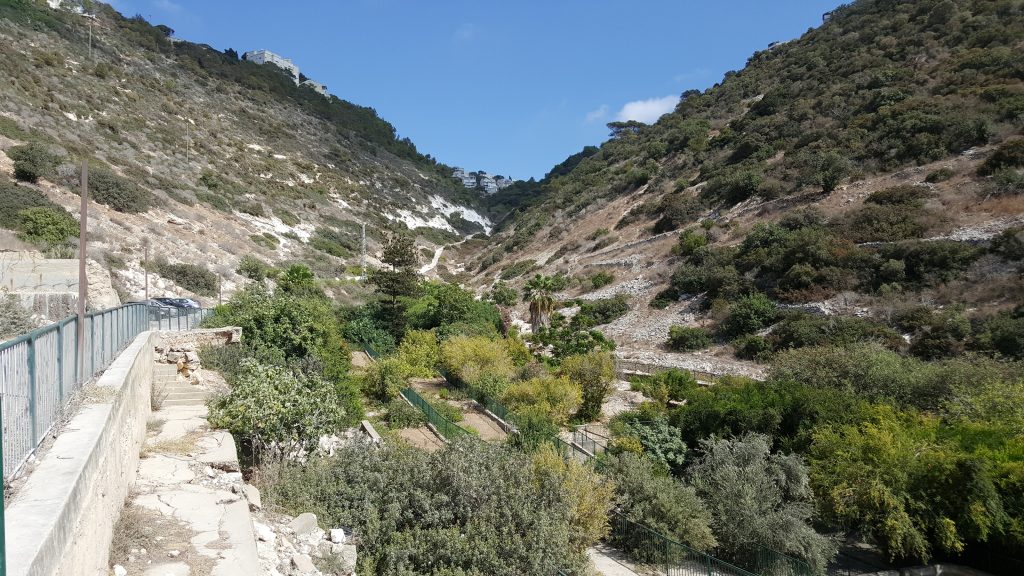
As a teenager growing up on Mount Carmel, I often walked down Wadi Siah. Bustan Khayat provided the treat at the end of the journey: mulberries, pomegranates, or grapes, depending on the season. It was also a perfect spot to rest a bit before going up the long stairway that connects the wadi with Kababir, at the top of the hill. I was curious about the history of the place: who has built it and why is it in such a shape, but it was only years later that I learned the answers to these questions.
In the late 90s, as a second-year landscape architecture student at the Technion, I was given a task to propose a conceptual design for Bustan Khayat. Around the same time, I got to personally meet a member of the Khayat family. I decided to ask a bit about the history of the place and how come, even though the family still lives in Haifa, the beautiful place that carries its name suffers from such neglect. That was when I found out to my surprise that the Bustan no longer belongs to the Khayat family, but rather to the City of Haifa. After the passing away of Azeez Khayat, the Bustan was passed on to his daughter Lucy, who has passed it on to the Church. The latter sold it in the early 1970s to the municipality, who left it to decay ever since.
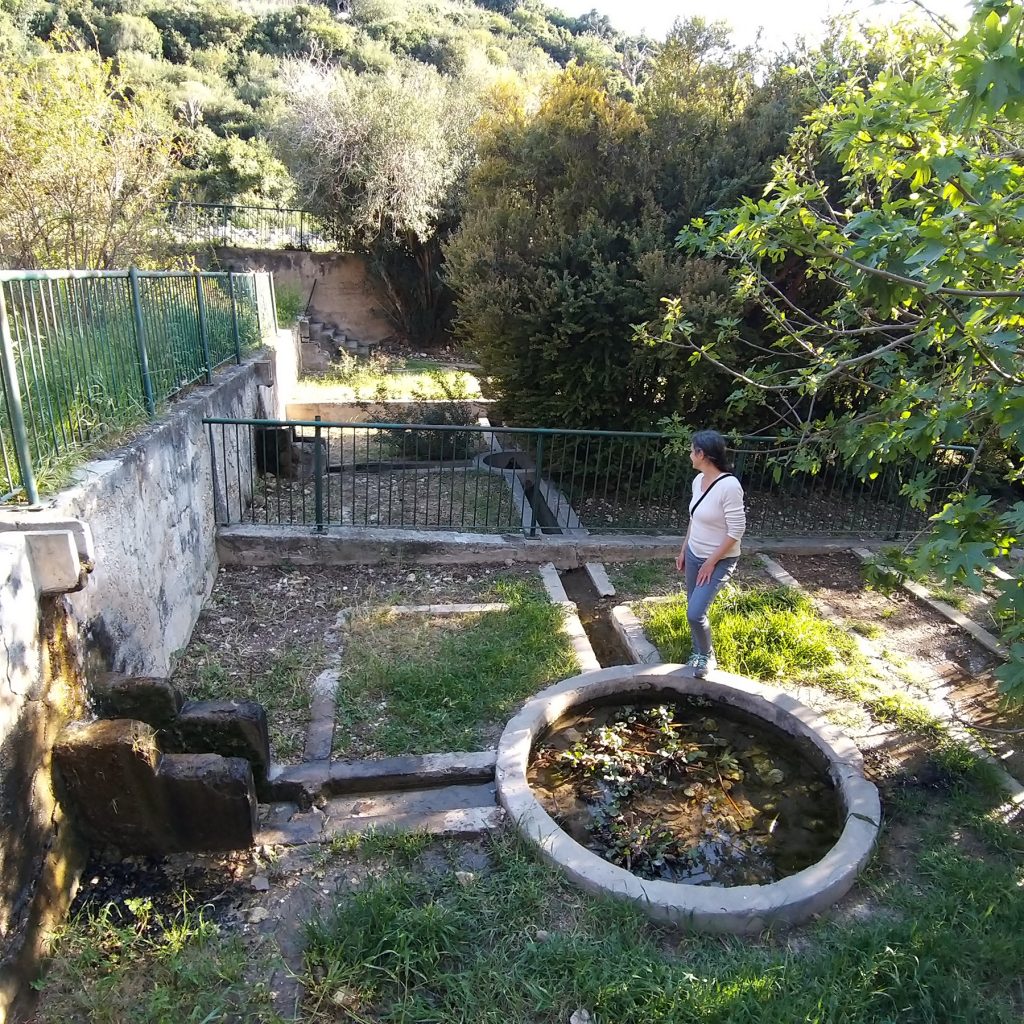
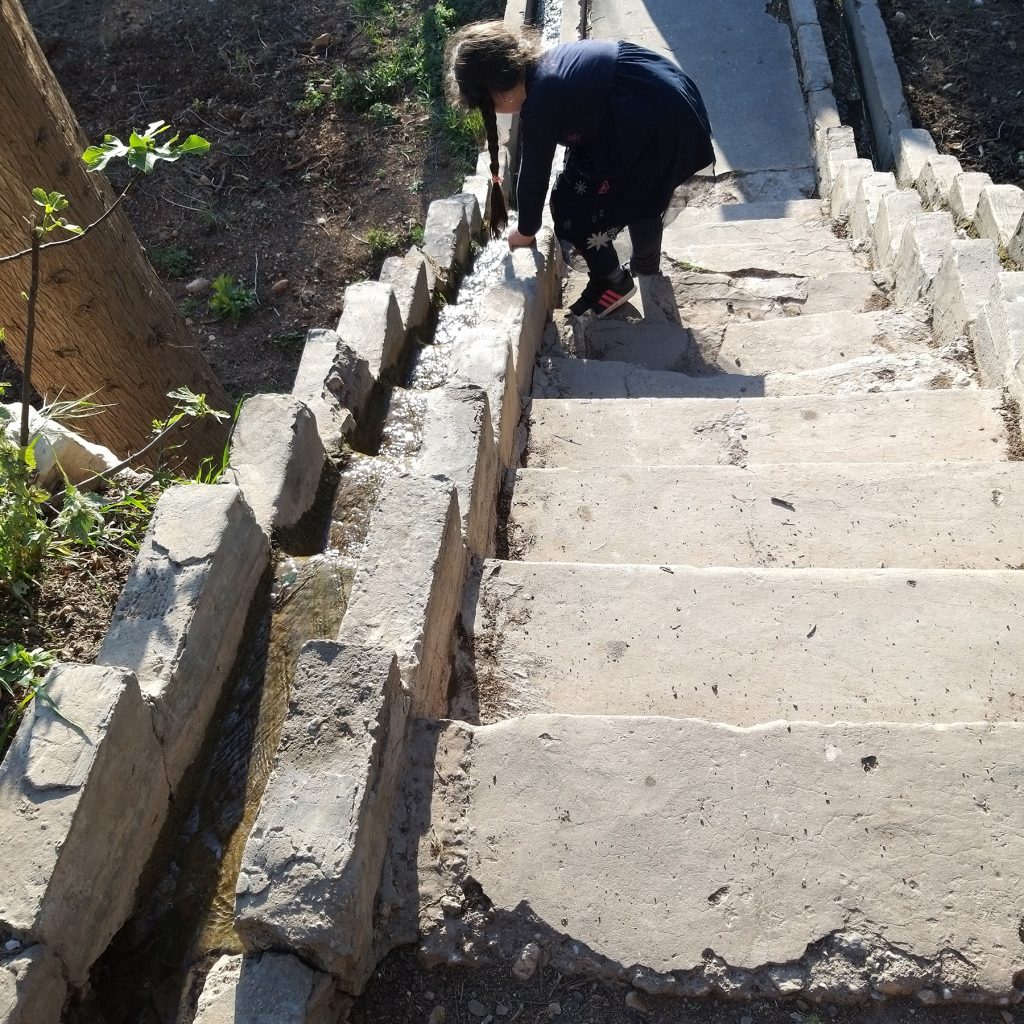
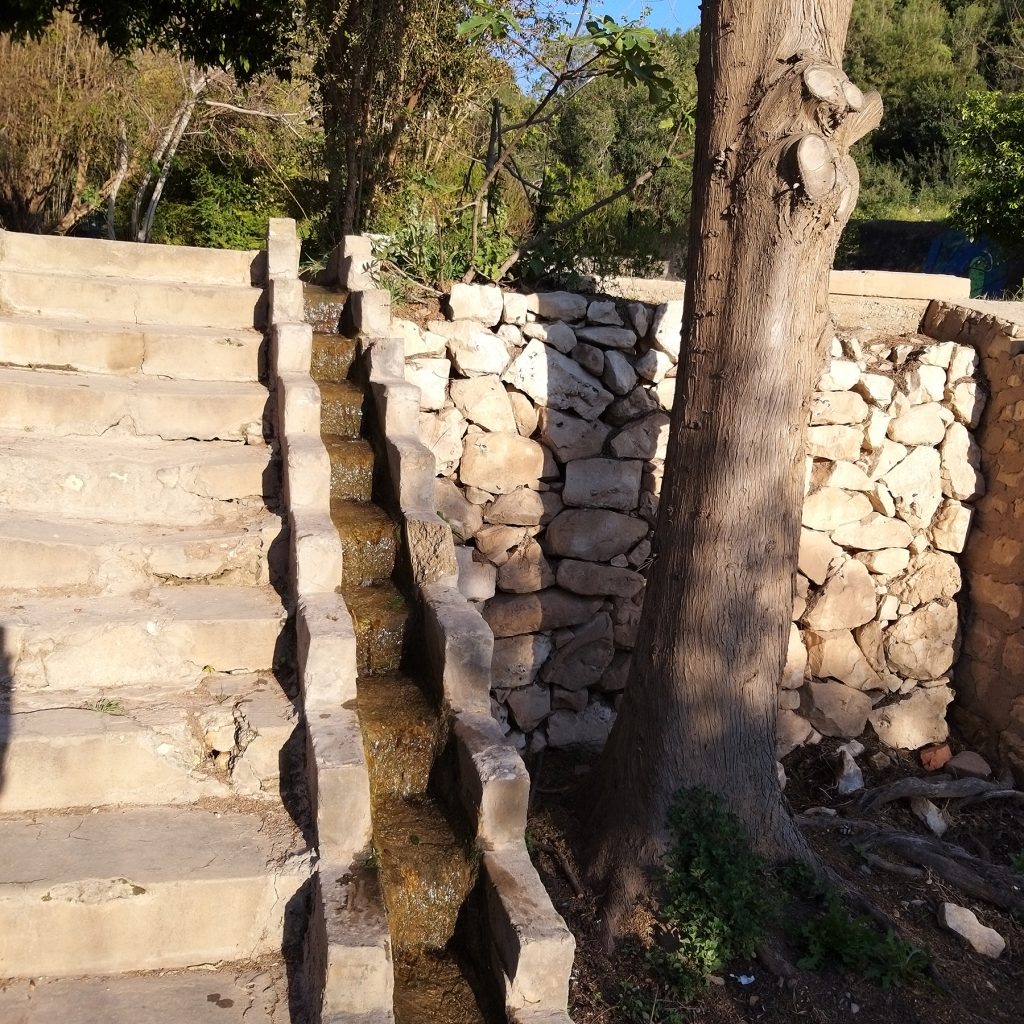
“The municipality neglects, the residents take care”, says a humble graffiti writing on one of the dry irrigation pools, expressing the simple state of things. In 2008, a group of volunteer residents, along with several NGOs, formed “The Coalition for Bustan Khayat”. The members of this group clean the Bustan and organize activities that promote its preservation.
The sadness of Haifa, a city of eternal unfulfilled potential, lurks around every corner of the Bustan.
For almost fifty years, under seven different mayors, the municipality of Haifa failed to give this place the loving hand that it needs, despite the calls of activists and various professional preservation plans that were made throughout the years.
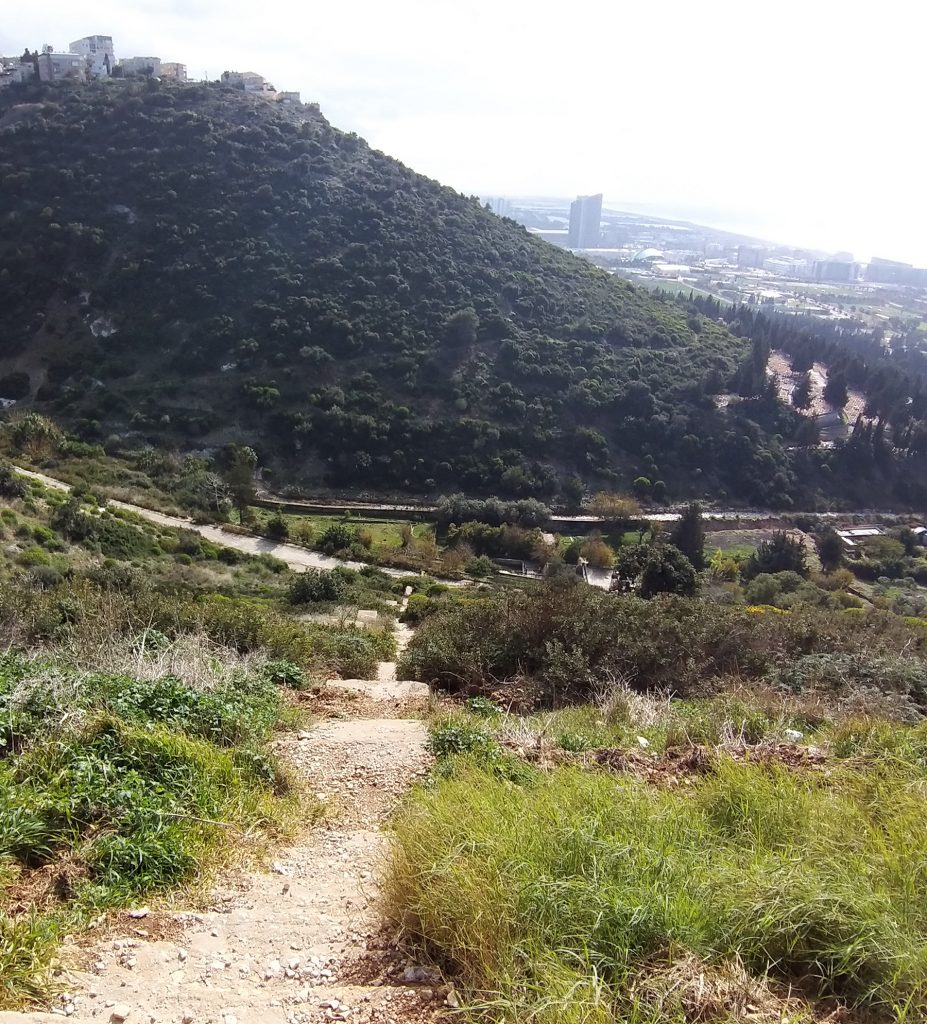
Looking at the scenery from the top of the stairway that links Bustan Khayat to the city, one can almost detect the metaphoric sorrow-dove from Khoury’s book swooping over the ruins. Not the view of the sea, nor the mountain, not even the vast cemetery, bring forth this fit of sorrow. Rather, the deep disappointment from the city as a collective entity, that constantly fails to take responsibility over its beautiful and delicate environment, is what gives the sadness of Haifa its grayish wings.
[1] Elias Khoury, My Name is Adam: Children of the Ghetto, translated from Arabic by Humphrey Davies
[2] Bustan is a garden that consists of a variety of fruit trees and herbs.