
These words are written in a time of crisis. They are written in a country where any time is a time of crisis, though for now we will not focus on the whole country, but rather on one city, the city of Haifa, my childhood hometown.
The Haifa I grew up in hid its past crises from its children, building up a reputation of a peaceful town where people’s minds are set on work, not looking for any sort of drama.
Local pride in our working-class town was often mixed with self-irony prompting jokes such as:
“What’s the best place to go to in Haifa if you want to party? The road to Tel-Aviv”, or “What do the people of Haifa do in the evenings? Watch the 5 o’clock news and go to sleep”.
And then came the First Gulf War. Suddenly, Haifa made the news. ‘Greater Haifa’, as the headlines said, is sure to be one of the main targets for Saddam Hussein’s missiles.
In November 1990, the UN Security Council passed a resolution that Iraq should withdraw its forces from Kuwait by 15 January 1991. As the world counted down the days to the ultimatum our daily routine and immediate environment started to change.
In fear that the missiles might be armed with chemical warheads, each household turned one room into a ‘sealed room’ by applying nylon film and plastic tape on the windows and doors. Each person was given a personal kit that included a gas mask and an atropine-filled syringe that they had to carry with them everywhere. Supermarkets were emptied of basic products as people began to stockpile. Strange new landmarks were established as anti-missile batteries appeared on the mountain and an American aircraft carrier showed up in the harbor.
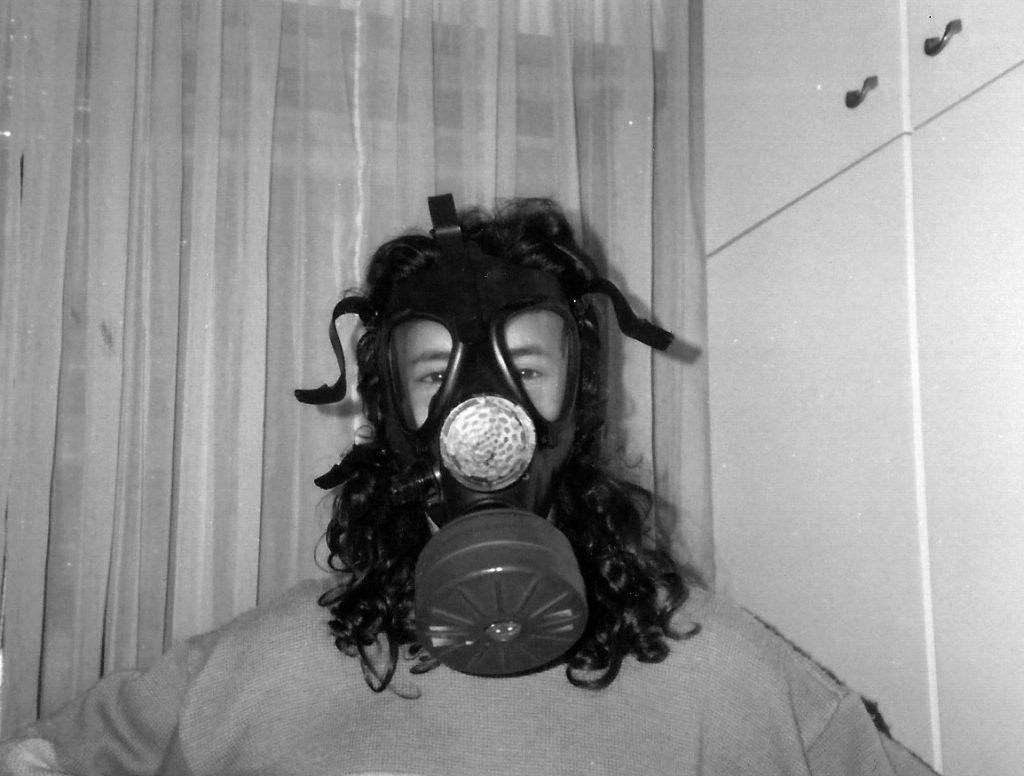
The several weeks that the missiles were fired on the city turned out to be less damaging than was feared. For the kids they were even fun as schools were shut down for a while. Those school-less weeks taught me some meaningful lessons though. Along with the transformation of our everyday life I experienced a transformation in the way I viewed my hometown. The state of emergency that temporarily tagged this sleepy town as ‘Greater’, opened my eyes. Aged 14, I was curious for the first time about Haifa’s place in the context of the Middle East.
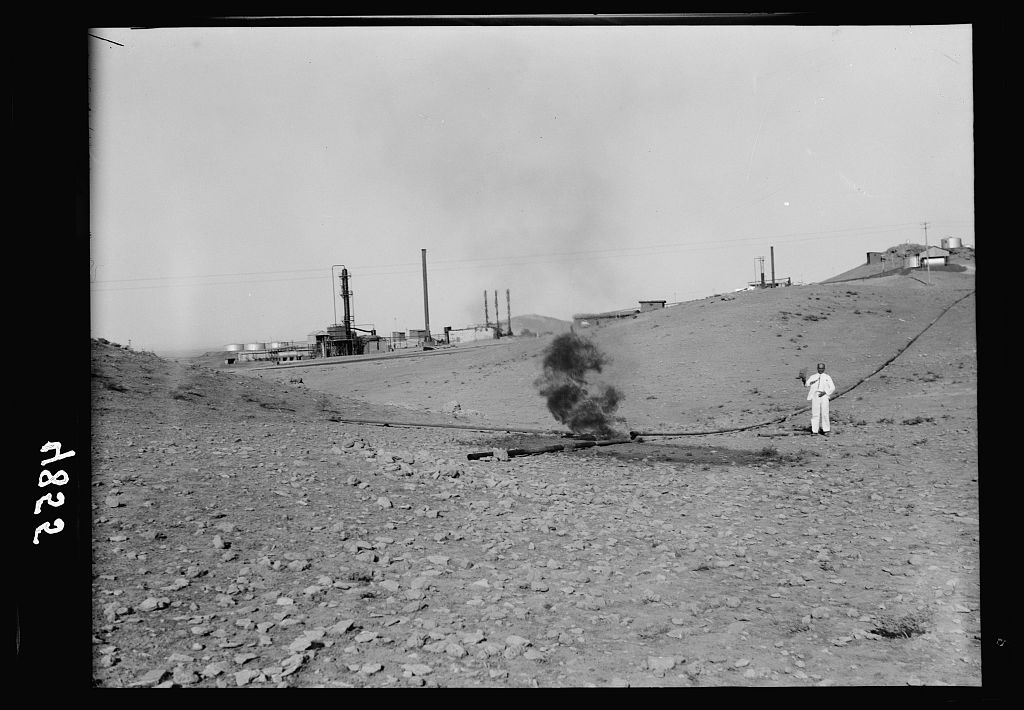
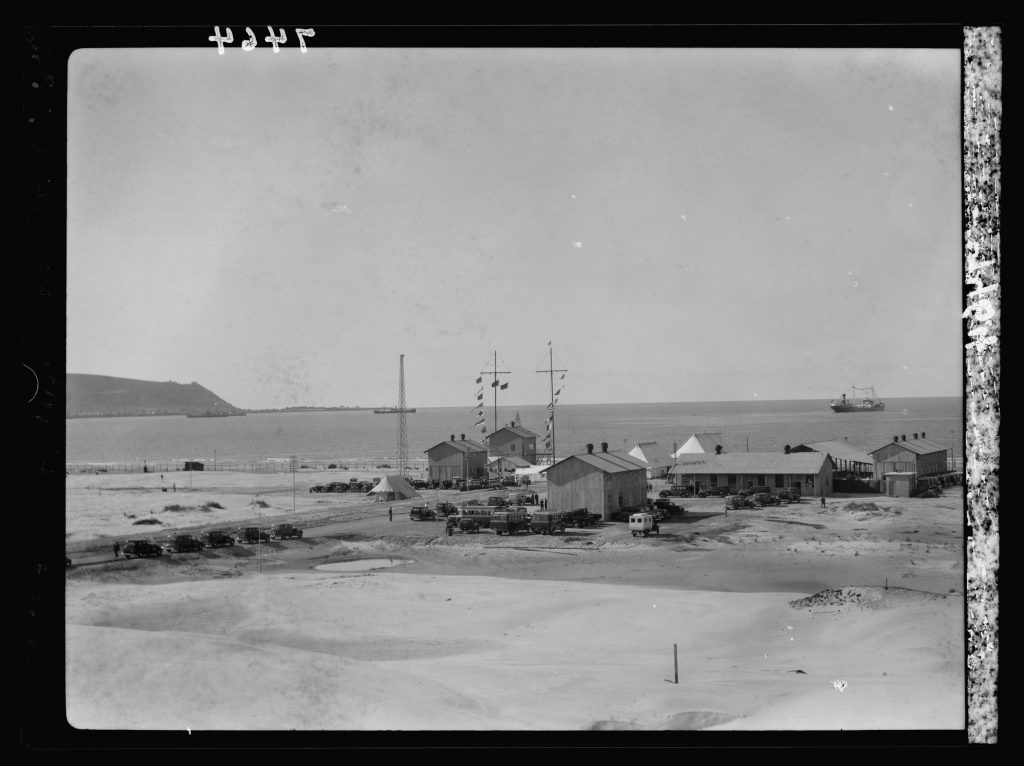
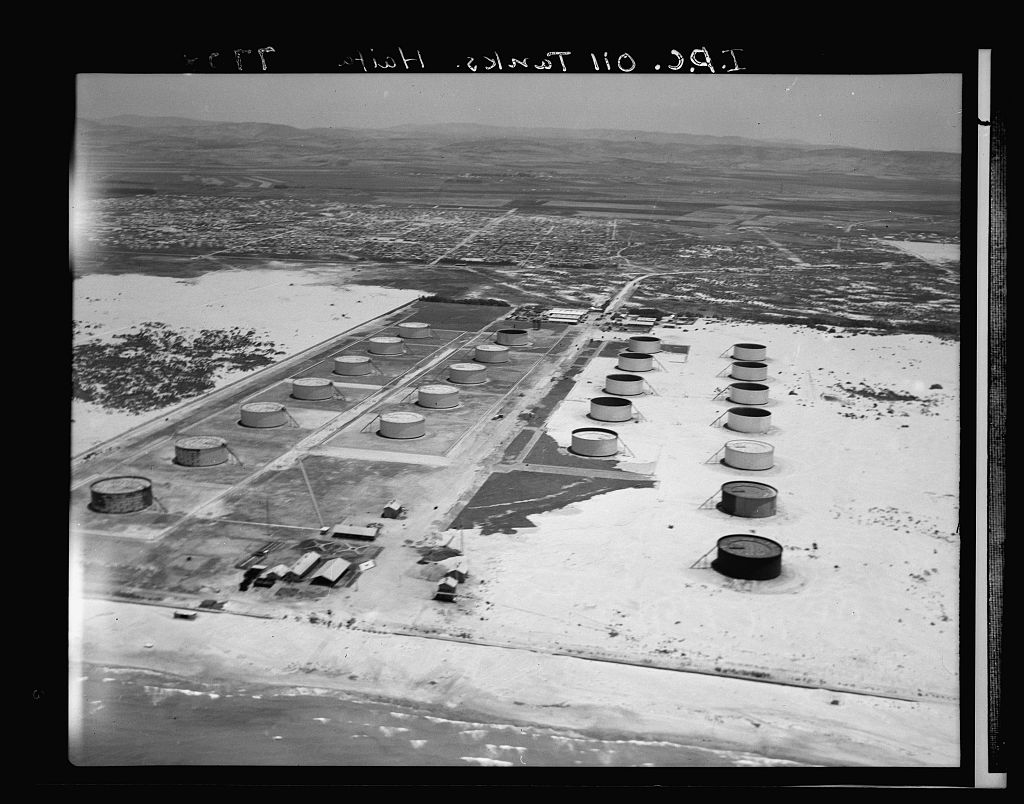
My curiosity grew when I heard the missiles were launched from areas in northern Iraq with the mysterious names ‘H1’ and ‘H2’. The generals interviewed on TV didn’t explain what these names meant, but I was told that the H stood for Haifa. When I asked about the circumstances that led to naming places in northern Iraq after the city of Haifa, I was told to look out my window at the iconic oil refinery, the unofficial symbol of the city. This refinery used to be linked to Kirkuk by a 942 km-long pipeline. H1 and H2 were points along that historic line.
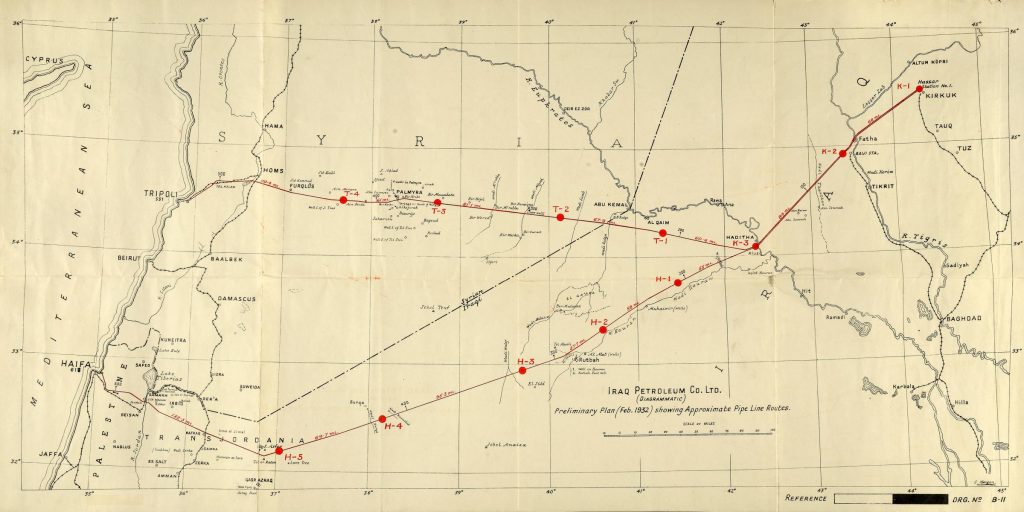
source: Rachel Havrelock, Pipelines in the Sand: The Middle East After Sykes–Picot. link: https://calert.info/details.php?id=1044
The pipeline ended its operation with the outbreak of the 1948 war but the Haifa oil refinery remains active to this very day. It is surrounded by a huge petrochemical area which still makes it a strategic target during times of war. No less disturbing is its destructive impact on the environment and the health of the hundreds of thousands of people that live around it.
The current Coronavirus crisis reminds many people here of the atmosphere during the First Gulf War: putting on masks, shutting down schools, stockpiling and so on. As for me, this crisis takes me back to those times when I first realized the impact of a global crisis on my own habitat.
For a couple years I have been meaning to start a blog that will focus on how social and political processes shape our environment, from my personal subjective experience. Being confined to home on account of a global set of causes and effects, finally made me act.
I named the blog H1 and H2, in honor of those two points that helped me connect the dots between the large-scale politics and a specific landscape, between historic events and everyday spaces, between the social and the personal perspective.
Hope you enjoy!
Source: commons.wikimedia.org
Source: commons.wikimedia.org
Source: commons.wikimedia.org
Thank you, for sharing the past of haifa through your own experienes and memories, which makes an important history lesson so much more touching. I’m curious to read more.
Thank you Clara!